105 MacKay Street, Thames, New Zealand
Thames Aquadome
SIZE
740 m²
FABRIC
Nylex Camlon Airflex 750
BUILD
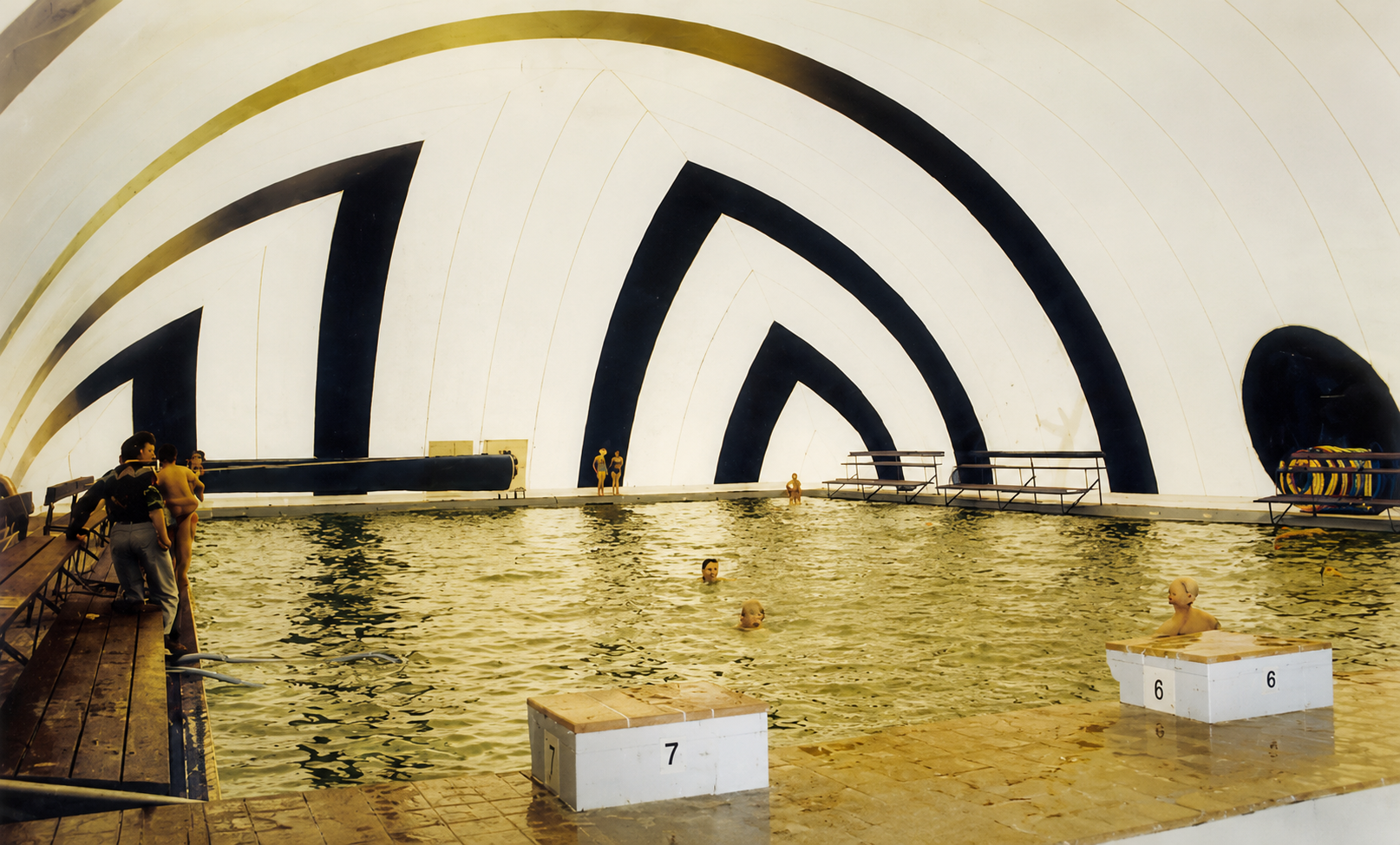
The Thames Aquadome was developed for the Thames Amateur Swimming Club as an economical and practical solution for covering the club’s outdoor swimming pool. The club had been looking for a suitable enclosure for some time, but limited finances and a desire to preserve the character of the surrounding environment made a conventional building difficult to justify. An air-supported membrane structure provided a way to achieve the required covered facility without the cost, permanence or visual impact of conventional construction.
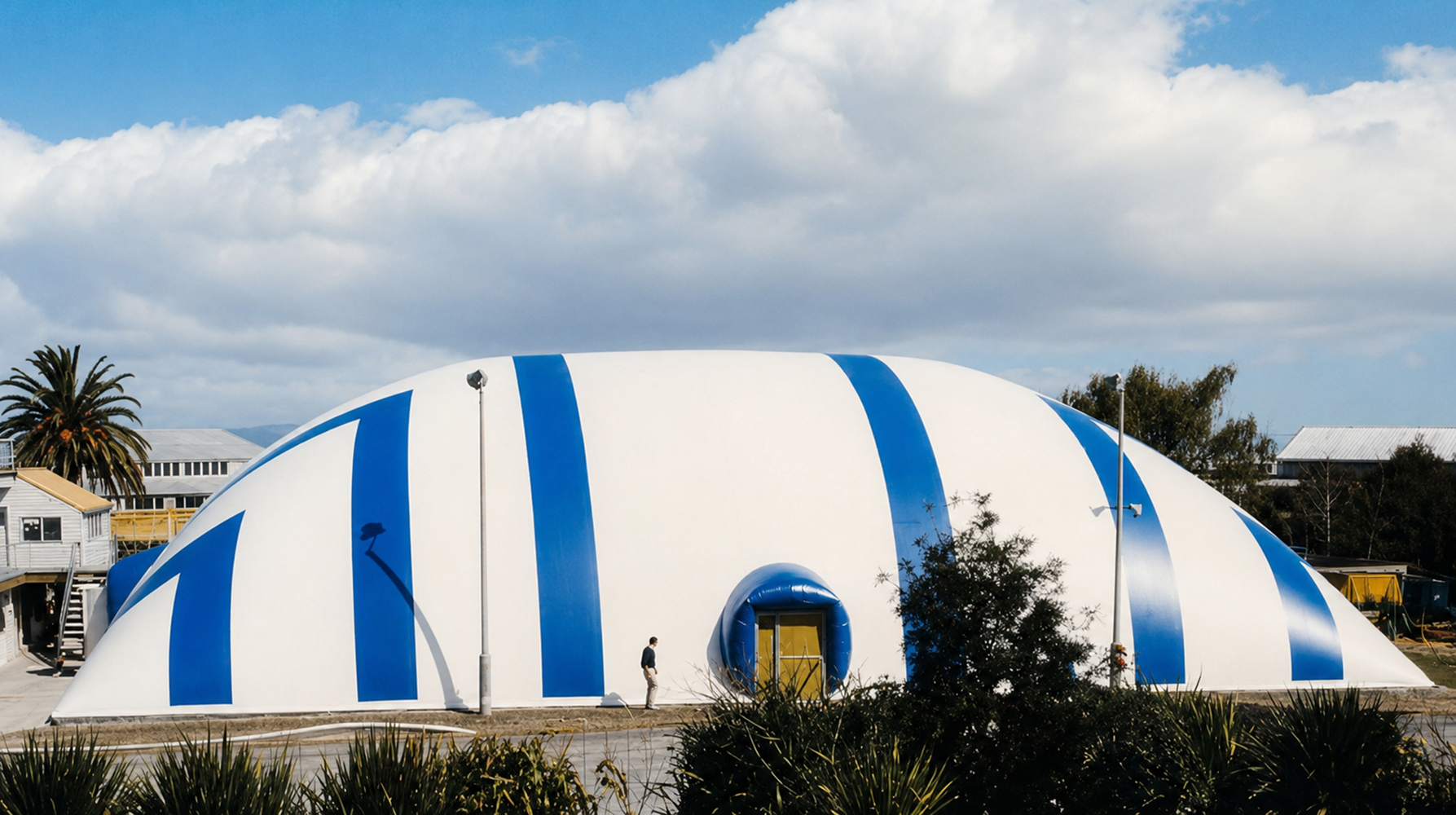
Measuring approximately 33.5 metres long by 22 metres wide and 8.5 metres high, the dome provided a clear, uninterrupted space over the pool. Its air-supported design was particularly well suited to the humid pool environment, as the membrane is unaffected by moisture and humidity and requires no conventional structural framework within the pool area.
The structure was supported by a two-stage centrifugal fan system, with the first stage providing the normal operating pressure and the second stage providing additional pressure in the event of pressure loss. An independent diesel-powered auxiliary fan provided automatic backup in the event of a power failure. Ventilation could also be increased through vents incorporated into the emergency doorways, improving air turnover during warmer conditions.
The membrane was manufactured from Nylex Camlon Airflex 750 in translucent white, with blue corner panels providing additional visual interest. The fabric was developed specifically for long-life membrane structures, using a high-tenacity Trevira polyester base cloth with a heavy-duty UV-inhibited PVC coating. Its translucent finish allowed natural daylight to enter the dome while maintaining a light and open internal environment.
Access was provided through a fibreglass revolving door and two emergency exits, with the latter incorporating steel frames, plywood panelling and panic-bar release mechanisms. The structure was designed with simplicity in mind, allowing the access units to be fabricated to standard external dimensions and positioned centrally within the sides or ends of the dome.
The completed Aquadome transformed the club’s ability to train throughout the year. Swimmers could train in significantly warmer conditions, around 24°C, without being exposed to the cold winds and rain that had previously affected training. For a club that had spent years searching for a practical way to cover its pool, the completed structure represented the realisation of a solution that had previously seemed difficult to achieve.